I want to keep track of books that I read. I haven’t been doing that for a long time. This will just be a list of books and whatever I feel like I want to write about them.
Now, looking back from Jan. 2nd, I’m really glad I re-read the Neuromancer trilogy, and finished the Blue Ant trilogy, something that I wasn’t able to do back in college. I might try to read The Peripheral and Agency in 2026.
I wish I had put more time into The Power Broker. That’s a real beast of a book! I need to try to reserve some time to read for that. I’m really glad I tracked books that I was reading though, this is fun!
1. Neuromancer. William Gibson. 1984
This is actually an honorable mention; I started reading this back in October 2024, and probably finished around Christmas. I got interested in reading Neuromancer again because I came across someone playing the Neuromancer video game on Commodore 64 on YouTube, and kept watching it. But it ended about a third of the way through. That got me thinking – I know I played that game on the Apple //e back when I was in high school. I definitely did not finish it. It has Amiga and Apple ][GS ports, so I thought it would be fun to emulate those and play
So I got into that for a bit. That got me interested in the book again, so I started a re-read. I don’t know how many years it had been since a re-read that. I probably read it in University at least once. I first read it in high school and was enthralled.
The amazing thing is that I did not remember the vast majority of the book. I remember a lot about Cyberspace and decking, but very little of the world travel, tactical operations, and trip into outer space.
As someone living in Japan, it was surreal to re-read it. The book famously opens in Chiba, where the sky is the color of untuned TV static. I can vividly imagine that, though I bet modern kids would think that is just blue or something. I haven’t spent too much time in Chiba, but some of the descriptions do feel a lot like late night Shinjuku. There are still capsule hotels around, but the time of capsule hotels died with 80s boom and bust and the Japanese lost decade.
My brief summary is that we meet Case, who used to be a deck jockey but got in some trouble with the Yakuza who used some nerve agents and chemicals to prevent him from doing that any more, so he became a fixer in Chiba, living on the edge. He gets contacted by the mysterious Armitage who offers to reverse the process that was done to him for help with a complex scheme, and we meet the Razergirl Molly Millions who is Armitage’s muscle. Case talks with Dean, an old and ageless information broker who may be a puppet of an AI? When Dean arranges for Case’s girlfriend to be killed, he goes with Molly and Armitage across the world to Turkey to pick up a sadist who can project illusions via some sort of body modifications who is also essential to their plan. They also spend some time in the Atlanta Sprawl and get technical support from The Finn from Metro Holographics in New York (a quick supersonic train ride away) to prepare for a run on Net/Sense to steal a ROM construct of a famous Cyberdeckker, Dixie Flatline. Who wants to not be a ROM ghost. They obtain some sort of Chinese ICE breaker software, and head up to the Fireside space station where the Tessier-Ashpool family has their enormous CPU cores and Artificial Intelligence experiments. The Turing Authority, by the way, monitors Artificial Intelligence to make sure they don’t get too smart.
Lots of intrigue around the crazy cloning Tessier-Ashpool family, and finally the ultimate goal is achieved: Armitage was a poor vet being controlled by the Wintermute AI all along, who wanted to unite the Neuromancer and Wintermute AIs, freeing them in some way and releasing them into Cyberspace. Case’s run manages to do that.
I really enjoyed this re-read of the book, and particularly with everyone talking about Large Language Models (LLMs) and Generative AI lately, it somehow really seems to be relevant. The sections with the Neuromancer AI are hard to follow, and I’m sure that I don’t understand everything that Gibson is trying to say, but as art and vibes, it’s a good time. The whole vision for Cyberspace in some ways missed the mark, but in many ways set up decades of work following trying to live up to and get to some of what was prophesied in the book. The internet that we have now is just as inscrutable and confusing as Cyberspace in Gibson’s book, if not more so. I was really surprised at just how little the book is about Cyberspace, and much more about people, and motivations and machinations of organizations and AI. We’re living through some of these same times now with major corporations exerting undue influence over people’s lives.
2. Burning Chrome. William Gibson. 1982
Started sometime in December 2024 and finished in January 2025.
Of course, once I read Neuromancer, I realized I needed to read the rest of the Sprawl trilogy. I vaguely remember reading them in high school as well, but had very little memory of the books. I figured I’d read the short story collection before moving on to Count Zero. It’s a fun collection, definitely worth a read. It holds up. I also went to see Johnny Mnemonic in theaters when it came out, and liked it a lot. It was fun seeing the differences between what I barely remember from that movie and the short story here. Very fun seeing the introduction of Molly Millions though.
3. Count Zero. William Gibson. 1986.
Started January 2025, finished on the airplane (not, sadly, JAL but United) from Tokyo to San Francisco.
I remembered very little about this novel at all. It also has very little Cyberspace in it. The main through line is about a Corporate raider (literally) who extracts high value employees from one corporation to another, and the development of Biochips, with some behind-the-scenes advancement of the lore of Cyberspace and Artificial Intelligence.
4. Mona Lisa Overdrive. William Gibson. 1988.
Started January 2025 on the airplane (not, sadly, JAL but United) from San Francisco to Tokyo. Finished 2025-01-25.
All I remember about this book from my first read in high school is that it was about TV stars. Or something. Wow, my memory is terrible. It’s definitely a better book a second time around. I enjoyed it a lot.
This book has Angie Mitchell, the young girl from the second book, whose father made a deal with the AIs in Cyberspace to make her somehow a bridge between Cyberspace and bioware. There’s also a lot of time spent with Slick, an artist building things who lives in “The Factory” with Gentry, someone who is trying to find “the shape” of Cyberspace and understand what happened to make it change with the AIs came. The first POV character is Kumiko Yanaka (and that last name annoys me – it is not a common Japanese name, and I’m not even sure it could be a Japanese name), the daughter of a Yakuza Oyabun.
I didn’t like the end, where the implication is that there is another, separate Cyberspace that the AIs found that is over in another galaxy, super far away. I like the idea – but when I think about it a bit, I don’t understand how that can work. Cyberspace is all about connections between computers and data, which means we need to have some sort of communication with this other Cyberspace for things to work. How does that happen given the speed of light? Very good otherwise though.
5. Blade & Bastard: Warm Ash, Dusky dungeon Volume 1. Kumo Kagyu. 2022.
I’ve been playing Wizardry: Variants Daphne (see Six Months with Wizardry: Variants Daphne or my earlier Wizardry Variants Daphne posts) lately, and when I saw that there were both light novel and manga series from the publisher, I thought it would be fun to read those. So I started to read the English version of the light novel (translated by Sean McCann).
It isn’t a difficult novel, but it is fun. A quick and easy read. I started reading it February 26th, and probably finished March 21st (based on when I bought the next one.) There were definitely some phrases that you can tell were translated from Japanese, and the translation seems pretty literal. The phrasing is often how you would see it in Japanese, where in an English translation I would reverse the clauses. Something like “For adventurers to celebrate in the tavern … It wasn’t too unusual.” If I try not to think about what the Japanese original would have been, it’s a pretty easy read. It’s a fun series. I can’t believe it took me until the second volume to realize that the main character’s name, Iarumas, is Samurai spelled backwards. Given the series, I should have noticed that immediately. I didn’t realize it until they went to “Catlob’s store”, which is Boltac backwards, and Boltac is the name of the store in Wizardry 1. Boltac’s Trading Post, if I remember correctly. If I had more time I would have torn through this book even more quickly.
6. Blade & Bastard 1 (Manga). Kumo Kagyu (Author), Makoto Fugetsu (Artist), so-bin (Artist). 2023.
I bought the Blade & Bastard manga (Japanese – not the one above) February 26th along with the English light novel. I read the manga after the novel, and I’m glad because they tell the same story, but the novel is more clear. I’m not great at reading story and intent from images compared to words, but I enjoyed going through this in Japanese after reading the novel in English, so that is the structure I decided to continue with. If you are a fan of Wizardry, I highly recommend both of these. It isn’t literature, but it’s a fun read.
7. Blade & Bastard 2 (Manga). Kumo Kagyu (Author), Makoto Fugetsu (Artist), so-bin (Artist). 2023.
The manga takes longer to tell the story than the novel, so I read the first two manga volumes after the first volume of the novel.
8. Blade & Bastard 3 (Manga). Kumo Kagyu (Author), Makoto Fugetsu (Artist), so-bin (Artist). 2024.
I started this manga sometime in March, and finished shortly afterwards. It looks like this volume isn’t available in English yet, which surprises me.
9. Blade & Bastard: Wireframe Dungeon & Dragon with Red Dead vol. 2
I finished reading this something like April 4th. Generally I’ve been reading the novel, then the manga until it catches up to the novel, then the manga some more. I don’t read every day, but try to make some time a few days a week.
10. Blade & Bastard 4 (Manga). Kumo Kagyu (Author), Makoto Fugetsu (Artist), so-bin (Artist). 2024.
I started this manga sometime in April, and finished April 10th. Still not completed through the end of the second book, so I’ll read the next manga, volume 5, which is the current one I believe.
11. Pattern Recognition. William Gibson. 2002.
Started in January sometime. I have vague memories of starting this book back when it came out but I had trouble getting into it, and I stopped halfway through. I was also having trouble getting engaged on this read, but once I got through the first third of the book (and of course, my disappointment that this is a very different book than the Neuromancer series) I was more interested.
It took a while, but once I got a good third into the book, I was interested. I completed it 2025-04-17. It’s an interesting sort of spy thriller novel, though not what I expected from Gibson, still very good.
12. Blade & Bastard 5 (Manga)
Finished 2025-04-20, and at the time I finished it, that was the latest volume available. It takes time to draw pictures!
13. Spook Country. William Gibson. 2007.
I started reading this in April, after completing Pattern Recognition. I finished reading July 12th, at Enoshima in where we met up with Eric Han and Ron DeVilla. It was a slower burn than Pattern Recognition, and took me longer to get caught up in the book, but the ending really came together. I’m very interested in what the overall arc for the series will be in Zero History, since up to now I haven’t seen a real theme other than Bigend being someone with lots of money that is interested in esoteric things. The first book was, in my mind, talking mostly about marketing, and some strange technology uses that could be used as such with a dash of geopolitics. The second book was heavily into geopolitics and a bit about art and technology. I don’t see an overarching theme develop, but the book itself did really come together in the final chapters, so I expect something similar will happen in the micro for the final book and Marco for the series.
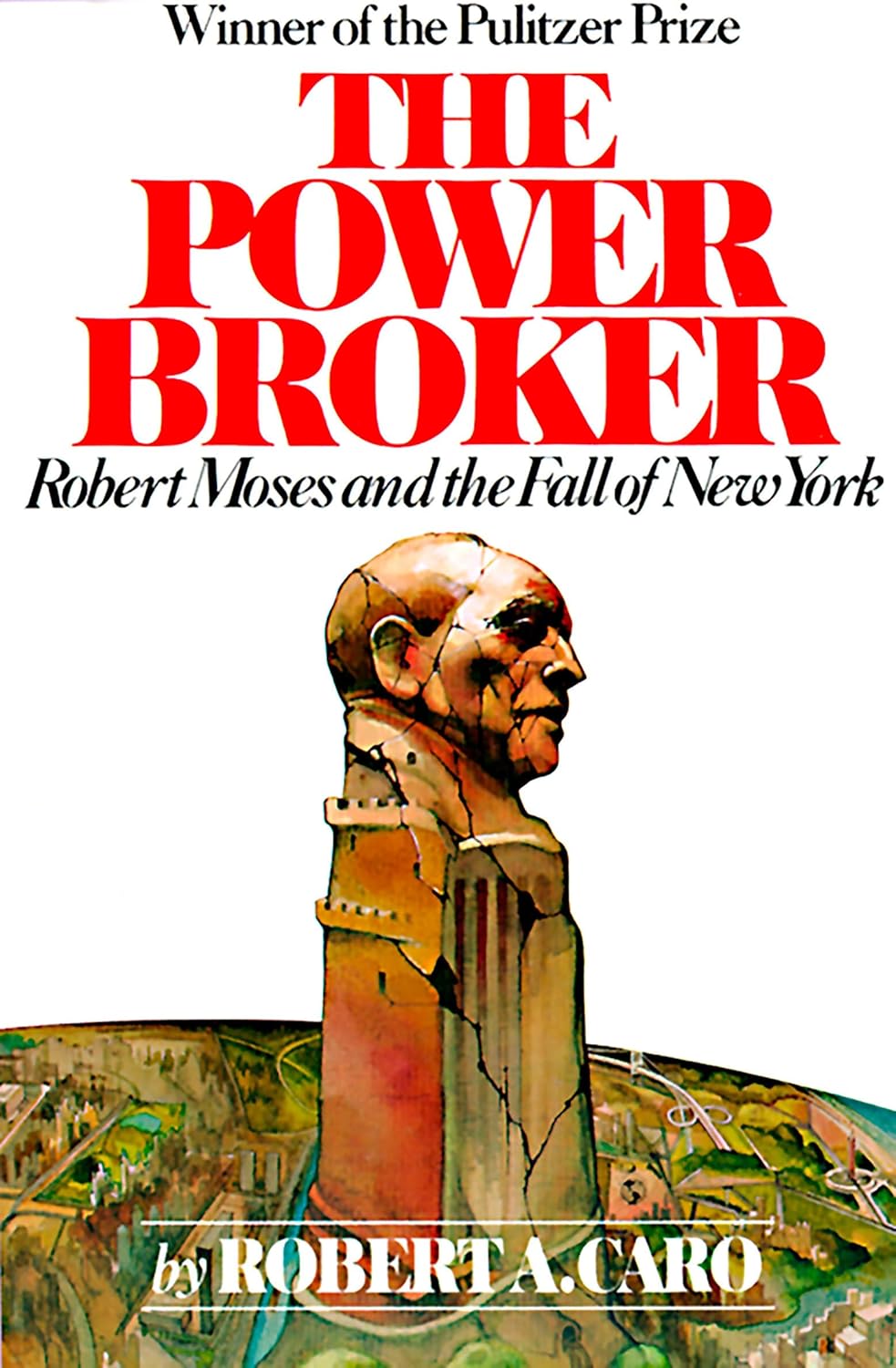
14. The Power Broker: Robert Moses and the Fall of New York. Robert Caro. 1974.
Yes, because of the 99% Invisible series on the Power Broker, I started to read this book as well. I started sometime in May 2025.
This book is going to take a long time, so I will try to weave chapters in maybe one a week or so.
15. Zero History. William Gibson. 2010.
I started reading this book July 13th, 2025, on the beautiful beaches of Enoshima with the Han and DeVilla families. Completed August 11th, 2025. I liked how this book tied in some characters from the first two books. It was an interesting trilogy about information, branding, and power. As with the other two books, it was a little hard for me to get interested in, but towards the end it really picked up and I was invested.
Now I need to think of another book to alternate with The Power Broker. Hopefully something light.
16 – 20. Gleipnir 1-5
At some point, Amazon recommended Glieipnir to me, and I thought the title was so strange (is this some sort of nordic thing?) it might be fun to read in Japanese. So I got the first book, and it was fun – a Shonen manga fighting high school thing – and quick to read. So I burned through the first 5 volumes pretty quick. It is an older series, with the final book (volume 14) published in July 2023. You know what is nice about older series? They are already done, and you can read the whole thing! So I’ll try to finish this off in 2026.
Leave a Reply